Harnessing the Power of Open-Source Models for Image Retrieval in Azure Machine Learning
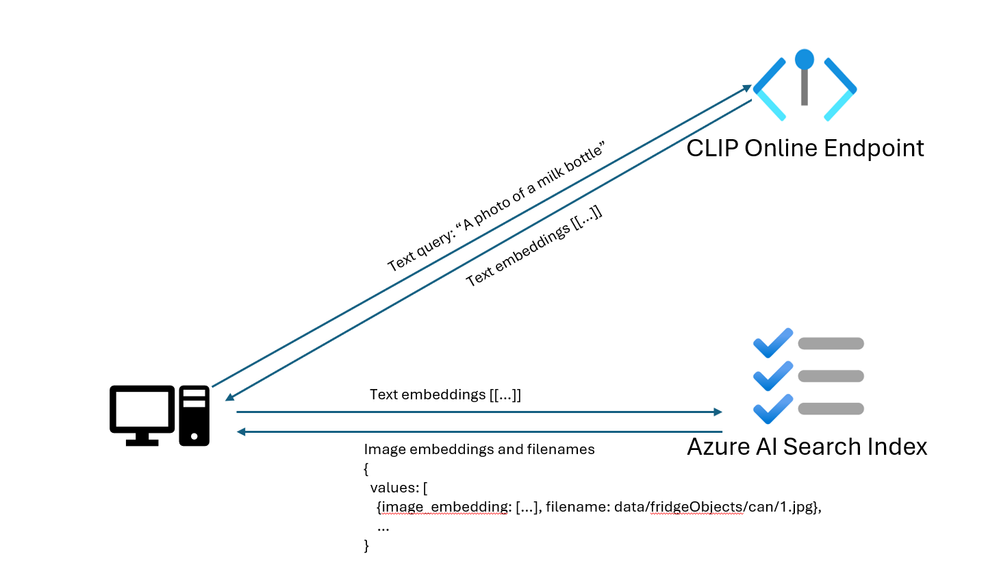
image retrieval thumbnail

This is a study that I contributed to while working with the Microsoft AzureML AutoML team. My main contributions to this work are developing the end-to-end text-to-image retrieval example, performing pretrained and finetuning experiments for the models using in the text-to-image section, and adding support for the CLIP embeddings models to Azure Machine Learning catalog.
Keep reading

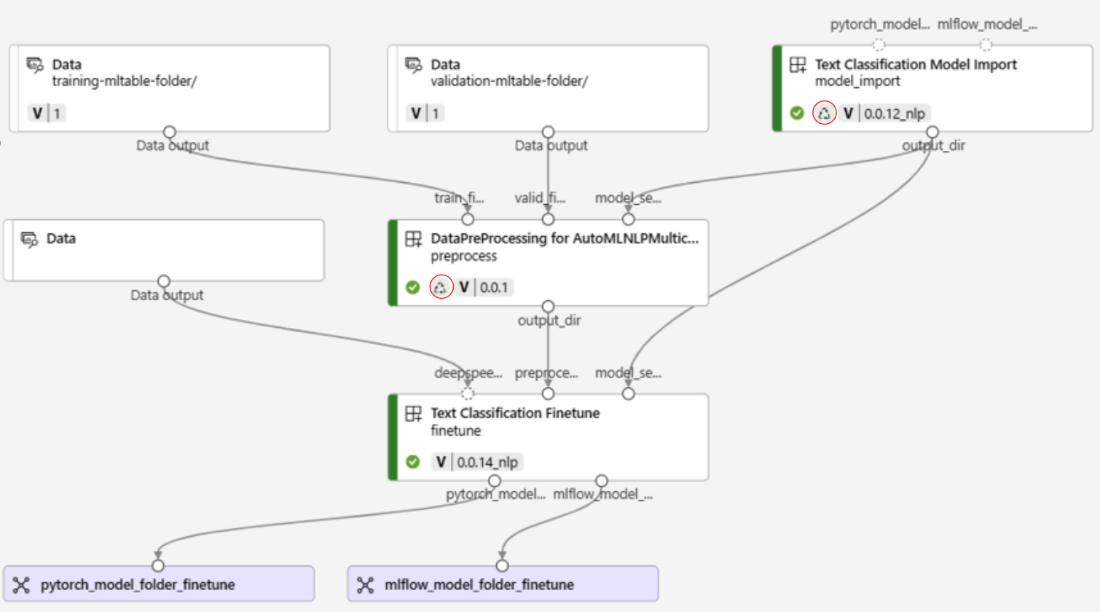
AutoML Sweep Over Pipelines

image retrieval thumbnail

This is a feature that I contributed to while working with the Microsoft AzureML AutoML team. My main contributions to this work include service side support for training parameters, metrics reporting, transparent usage, multi-gpu finetuning, and telemetry reporting. My work also entailed adding support for pipeline sweeping on the SDK side. I also contributed significantly to testing coverage for services and SDK.

Keep reading

SegSalad - A Hands On Review of Semantic Segmentation Techniques for Weed/Crop Datasets

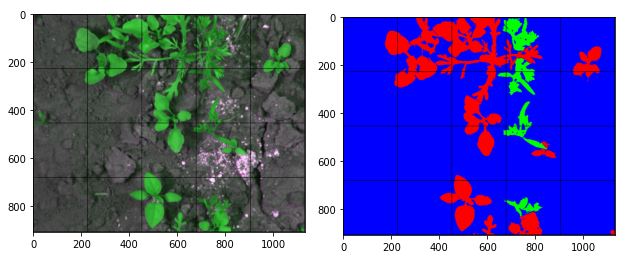
plant image with segmentation mask

In this project, I explore a few common semantic segmentation techniques that have been used on weed/crop datasets for precision agriculture tasks. I use image patching as a data augmentation technique, train with transfer learning for three different semantic segmentation neural network architectures, and compare these models qualitatively and with the Intersection Over Union metric. I discuss the challenges and takeaways of the project.

Keep reading

Why Individual Responsibility Matters for Sustainability

This is the final paper that I wrote for my Environmental Ethics course. I discuss the ethics of climate change and why making lifestyle changes on an individual basis is important for sustainability despite the inconsequentialism objection. This was an incredibly valuable class to me, as it did not tell me what to think about environmental ethics but rather introduced me to many conflicting schools of thought on this subject matter.

Keep reading

GrocerEye - A YOLO Model for Grocery Object Detection

GrocerEye Predictions

This project is an investigation into real time object detection for food sorting technologies to assist food banks during the Covid-19 pandemic. I trained a YOLOv3 model, pretrained on ImageNet, on the Frieburg grocery dataset that was annotated with object detection labels. By training for 6000 iterations and 13 hours on a Google Colab GPU, the model was able to achieve 84.59% mAP and 70.10% IOU on the test set. I demonstrate the effectiveness of the model on images from the test set and inference from a natural video. Though the model performs well on the test set, it does not seem to be effective enough to deploy for real time object detection at this time. I discuss the challenges and possible extensions of this work.

Keep reading

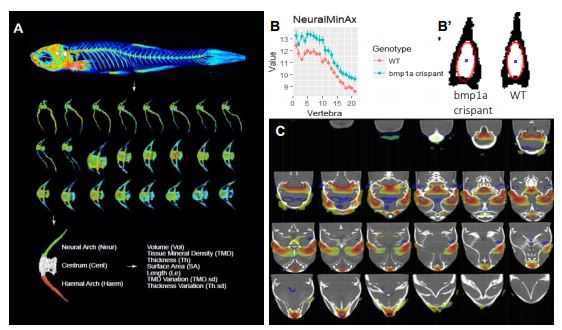
FishCuTv2 - An Extensible Software for microCT−Based Whole−Body Skeletal Phenomics in Zebrafish

Images from FishCuTv2 Abstract

I developed the second version of FishCuT, a microCT analysis software that implements a modular organization, and included additional features for automatically and rapidly measuring new bone characteristics. This tool is a software that is used by skeletal biologists to rapidly gather experimental data from microCT images. I programmed image processing modules in MATLAB, and modified data processing scripts in R. This work earned me my second Mary Gates Research Scholarship, a first-author professional conference presentation at the Orthopaedic Research Society Annual Meeting 2019, and an Undergraduate Research Conference Travel Award.

Keep reading